UltraScan 650 vs. Sunlight MiniOmni: Clinical Accuracy & BMD Measurement.
UltraScan 650: the First and Only FDA‑Approved Ultrasound Bone Densitometer for Radiation‑Free Bone Density Measurement with DXA‑Equivalent Accuracy
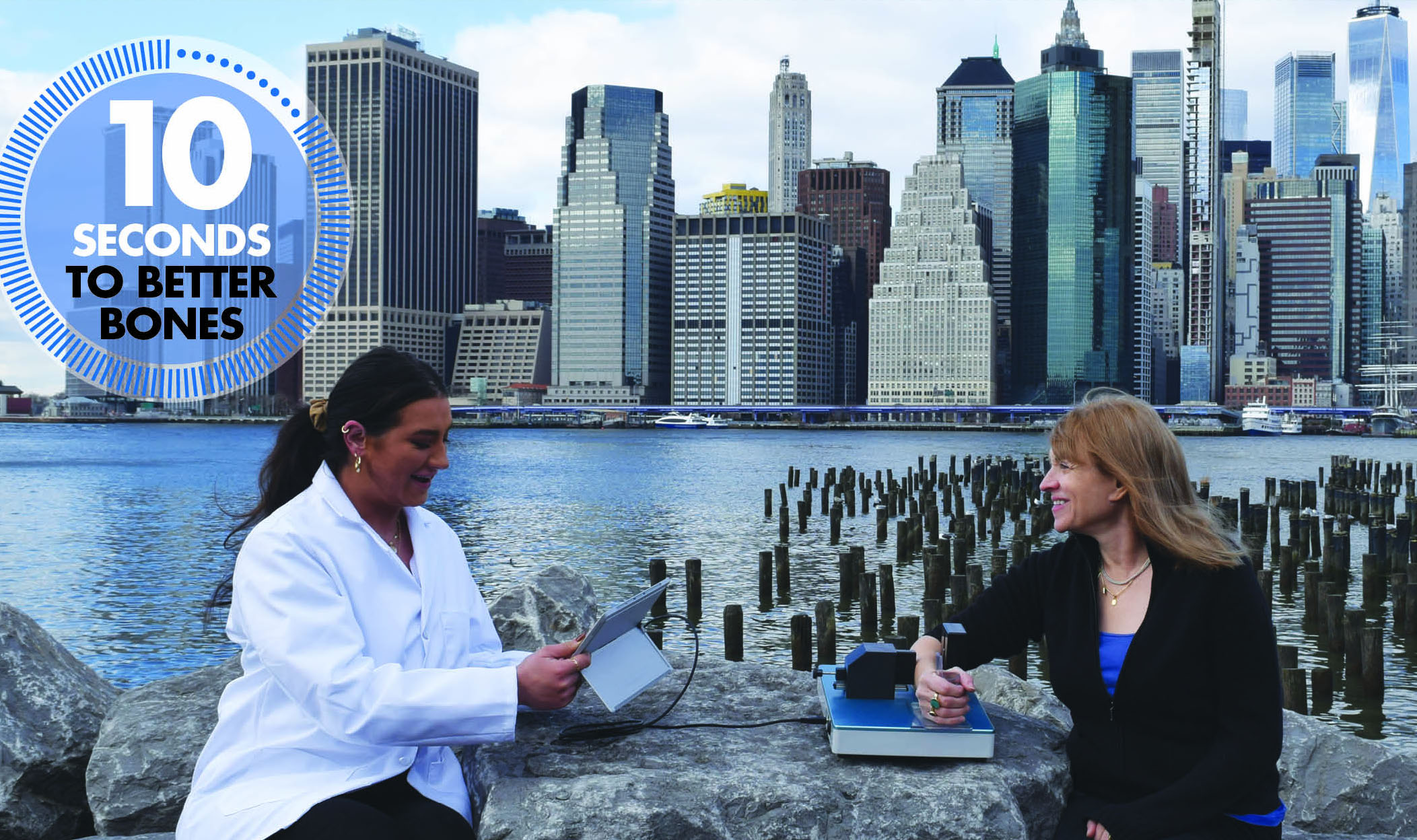
Beyond the Bone Sonometer: Choosing True DXA-Equivalent Accuracy
When screening for osteoporosis at the point of care, clinicians face a critical choice between a basic bone sonometer and a true bone densitometer. While devices like the BeamMed Sunlight MiniOmni offer portability, they rely on traditional ultrasound velocity measurements (Speed of Sound) that only correlate indirectly with bone quality. The CyberLogic UltraScan 650 bridges the gap between portability and the gold standard, utilizing patented Net Time Delay (NTD) technology to deliver direct, DXA-equivalent Bone Mineral Density (BMDus) measurements at the radius.
UltraScan 650 vs. Sunlight MiniOmni at a Glance
Below is a technical comparison of how the UltraScan 650 compares to traditional bone sonometers for clinical practice.
| Feature | CyberLogic UltraScan 650 | BeamMed Sunlight MiniOmni |
| Measurement Type | True Bone Mineral Density (BMDus) (g/cm2) | Speed of Sound (SOS) (m/s) |
| DXA Correlation | Highly Correlated (r = 0.93) | Indirect Correlation |
| Patient Workflow | 10-Second Scan (Roll up sleeve only; no foot/heel required) | ~1-Minute Scan (Multiple sites/probe placements) |
| Anatomical Site | Distal Radius (Arm) | Multi-site options (Radius, Finger, Tibia, etc.) |
| Technology | Patented Net Time Delay (NTD) | Omnipath Axial Transmission |
| Primary Use Case | DXA-Equivalent Screening & Assessment | General Osteoporosis Screening |
The Clinical Difference: True Bone Mineral Density (BMD) vs. Speed of Sound (SOS)
Most portable bone sonometers on the market, including the Sunlight MiniOmni, utilize axial transmission to measure how fast sound waves travel through bone. While useful for general assessment, Speed of Sound (SOS) does not give you a direct physical measurement of bone mass.
The UltraScan 650 operates differently. It is a true ultrasound bone densitometer. By measuring the transit time through both the bone and surrounding soft tissue, it isolates the true bone properties. More Information
Peer-Reviewed Validation: Clinical data demonstrates that the UltraScan 650 achieves a Pearson correlation coefficient of r = 0.93 against Dual-energy X-ray Absorptiometry (DXA). This means you get the clinical confidence of a central DXA scan in a fully portable, zero-radiation desktop unit.
Streamlining Your Clinic’s Workflow
Beyond clinical accuracy, the UltraScan 650 is engineered to maximize patient throughput and comfort compared to other point-of-care devices.
No Need to Remove Shoes or Socks
While some sonometers require heel measurements that disrupt the clinical workflow, the UltraScan 650 scans the radius. Patients simply sit down and roll up their sleeve.
A Complete Scan in 10 Seconds
Don't let screening slow down your staff. The UltraScan 650 completes its measurement cycles in a fraction of the time required by multi-site sonometers, allowing your practice to efficiently close care gaps and meet quality metrics without adding administrative burdens.
Peer-Reviewed Literature & Scientific Backing
We believe clinical claims should be backed by transparent, peer-reviewed science—not just marketing brochures. The underlying ultrasound technology of the UltraScan 650 has been rigorously tested and published in leading medical journals.
Accurate Bone Assessment via Ultrasound: Read our published methodology demonstrating how Net Time Delay safely and accurately isolates bone mineral density.
DXA Comparative Trials: Review the clinical data showing the r = 0.93 correlation that sets the UltraScan 650 apart from conventional speed-of-sound sonometers.
More Information Contact Us